
I’m going to be honest: I cited this book before even reading it.
I wrote an article a few months ago about the legacy of “My Beautiful Dark Twisted Fantasy” and how Kanye’s career is in a bit of a gray area right now (the time of writing this is 5/17/26). As I wrote more about the mix of love and hatred he got, I decided that I needed to get a quote from some source—a quote which talks about the duality of art.
I’ve written about that topic before, but my aim was to get it from some fiction. Nobody likes to cite from academic journals all the time and I certainly don’t think there’s anything on this, so I browsed my mental repository for books which delve into this.
Nothing came up. But I remembered a really tiny detail from my 10th Honors Lit. class.
We briefly discussed Oscar Wilde and his life, and I recalled my teacher’s quip about his thoughts on the division of the art and the artist. I thought that I could find some substance in it, and so I researched and soon found that these were conveyed as the prologue to his book, “The Picture of Dorian Gray.”
On the surface, the prelude seems to have no connection whatsoever to the story, but it really does once you finish the book. By itself, it’s phenomenal. Read it here (it’s great, I promise).
Once I cited the prologue and finished my article, I was now fully curious about the book. “if homeboy think it dis deep, the fic prolly sum gass” is most probably what I thought afterwards. So after a month of procrastination due to midterms, I finally got the book.
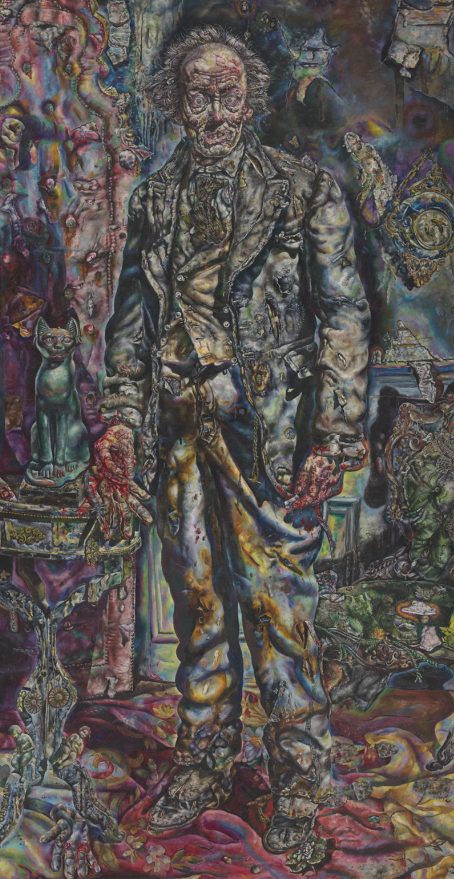
The story revolves around the titular character, a young man whose good looks are so weakening that literally everybody falls for him. At one point, a painter named Basil Hallward crafts a portrait of Dorian, one full of beauty and royalty. The latter loves it, but something strange takes place afterwards.
You see, at first, Dorian is young and naive, believing that good looks are the only stuff worth living for. This materialistic view soon turns him from an emotional youngster to a real asshole—he despises those who think differently than him, feels he’s better than everybody else, and is overall just an egotistic loser with good genetics. But, whenever he commits a sin, nothing happens to him; it’s his portrait that bears the brunt of it. Man can do drugs, go to brothels, rob people, literally do anything that’s bad, and he’s scot-free.
But his picture captures everything. After a while, even Dorian can’t recognize his own portrait.
The rest of the story continues on with this plot, showing how it leads to his eventual downfall. Despite being a simple sequence of events, the story’s chock-full of subtext. Wilde delves upon things like pretty privilege, how dangerously easy it is to sin, ego trips, and much more. But what was most apparent, was his fight for his sexuality.
Despite having a wife and kids, Oscar Wilde was a closeted gay man, and this secret led him to fulfill what that part of him wanted, despite the fact that society would hate him for that. You see, 19th-century Britain was strictly homophobic, barring any kind of same-sex relation and imprisoning anyone who does so. Wilde’s frustration with how his people would despise his orientation formed the crux of “The Picture of Dorian Gray,” along with numerous other jabs at Victorian standards, secrecy, societal shame, double lives—yeah, it’s a lot.
If you read between the lines, it’s pretty easy to pick up on the gay subtext, for it conveyed Wilde’s own feelings of alienation and hollowness; I mean, the stuff the man did to feel loved was considered shameful by everyone he knew.
That strange feeling of loneliness and anger fills the pages of this book. It’s this unique confusion Dorian feels as he goes on this no-good journey, and towards the end even I wondered, “Is Dorian a victim or a perpetrator?”
This book isn’t something to understand at the first read-through, and it might make you uncomfortable. But that’s its biggest strength.
This isn’t a watered-down drama. It’s a raw telling of someone’s own life.