
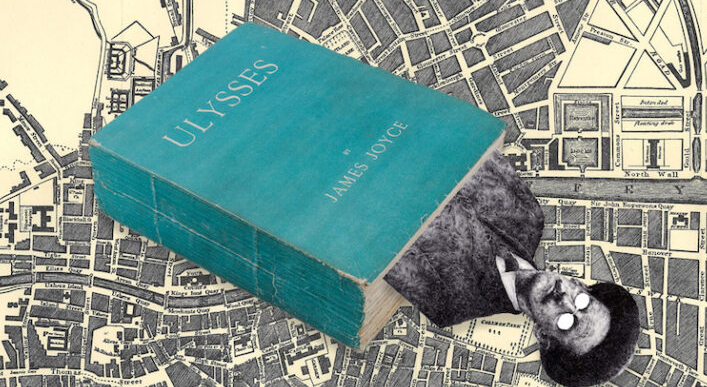
Ted-Ed is a really insightful channel.
They give you information about many important events in time, or beneficial advice on handling one’s life.
That’s how I found Ulysses.
Published by the prolific, and well-versed writer James Joyce, the novel is an extremely expositive piece of prose. Each character has a storm of details following him or her, sometimes to the point where it feels you are watching their actions voyeuristically.
However, the main highlight of the work is the pure dedication put into the framework and figurative language. Ulysses takes most of its structure from the Odyssey by Homer. It’s very obvious within the first few pages, as the book is organized into episodes, and the title even derives from the Latin variant of Odysseus.
There are three characters:
- Leopold Bloom- Our humble protagonist.
- Molly Bloom – Leopold’s intimately bored wife.
- Stephen Dedalus – The protagonist for the first three episodes, who is reintroduced in the final episodes.
Joyce’s story takes place on a single day: June 16, 1904. It’s a day of intense literature, and fictional boredom. As we read through Dedalus’ erudite monologue, Bloom’s stroll through most of Dublin, and Molly’s secret encounter with certain men, it becomes hard to believe a man can write so much about his hometown from afar.
Which is exactly what occurred.
In fact Joyce wrote the entirety of the novel during a trip through Paris, once stating that if Dublin was burned to the ground, his text would bring it from the ashes.
Aside from that, Ulysses is almost like an avant-garde documentary. The author experiments with the rules of fiction, and sends the reader on a journey through the cast’s lives, and provides intuition that is greatly helpful in order to enjoy the plot.
Although Ulysses might be James Joyce’s magnum opus, it cannot defend it from the omnipresent threat posed by the censorship laws in the United States, England, and other countries.
After a specific passage containing obscene material was published in the serialized edition, it was promptly banned.
Thus began a controversy so great, that it retained its place years after the novel was first viewed in 1921. Even after years of botched translations, revisions, biased debates, Joyce’s work still remains necessary for all to read.
The pure ambition and dedication that went into crafting results in a project that is of such stature, that it should be considered as one of the hallmarks of modernist writing.
I strongly believe this is a tome which should be discussed frequently, as it explores the depths of human emotion through satirical perspective.
Ulysses is a story which can be summarized in plentiful ways; the story of a man walking through his town whilst pondering about his personal and professional life, a wife rethinking the cultural idea of marriage as she cheats on her own spouse, an author describing how certain humanities can dissolve into our lives through a garrulous three episodes.
But all that culminates is just a group of people leading their solitary lives.
On June 16, 1904.